
Located at the estuary of the Thu Bon River, Hoi An rose from a modest port into one of Southeast Asia’s most vibrant international trading centers by the mid-16th century. The port city welcomed merchant vessels from Spain, India, China, Japan, and many other regions.
By the late 19th century, Hoi An’s harbor gradually declined as the mechanical port of Da Nang emerged as the new commercial hub. Despite this shift, Hoi An continued to serve as the political, economic, military, and cultural center of Quang Nam Province.
After Vietnam’s reunification in 1975, Hoi An became a town within Quang Nam–Da Nang Province. When the two regions officially separated on November 6, 1996, Hoi An was designated as part of Quang Nam Province. In January 2008, it was formally recognized as a city.
The image above captures a corner of Hoi An at the intersection of Le Loi and Bach Dang streets.
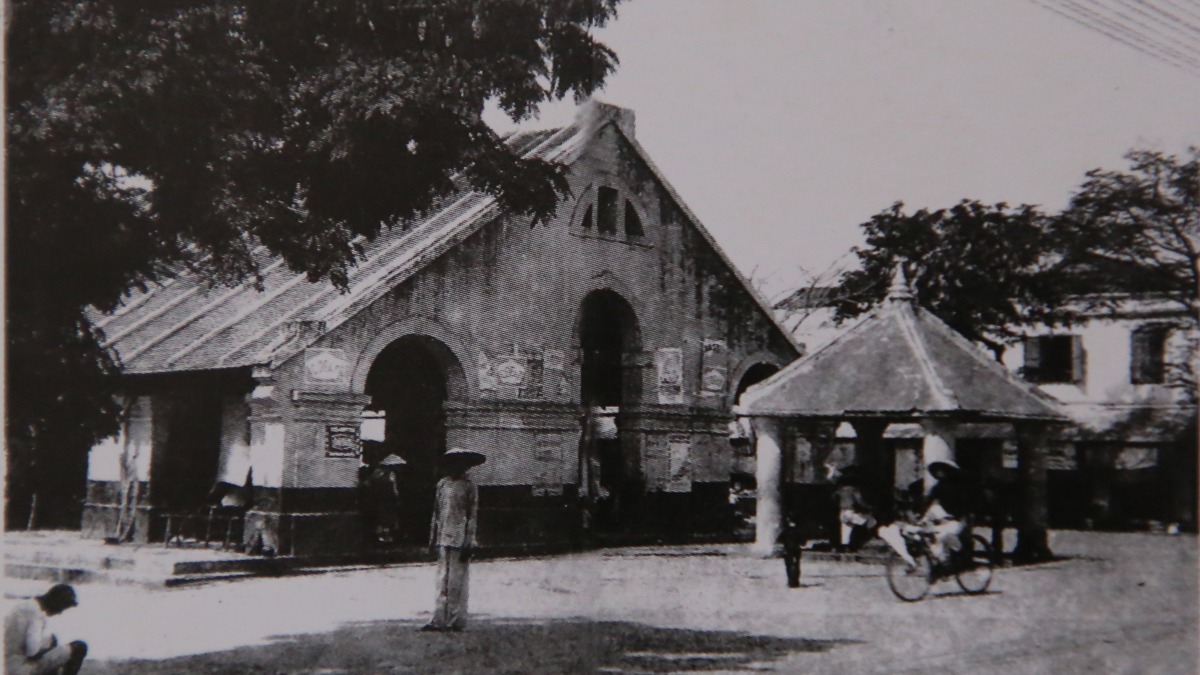
Hoi An Market, pictured in 1930, dates back to 1841. Originally located near Ong Voi Communal House, it was relocated in 1848 to its present site along Bach Dang River. Historically, the market functioned as an international trading hub where imported goods were exchanged.
The Guangdong Assembly Hall, situated at 176 Tran Phu Street, was built in 1885 as a communal gathering place for the Guangdong Chinese community. Featuring a distinctive blend of Guangdong and local architectural styles using wood and stone, it remains a popular destination for both residents and visitors.
The riverside road along Bach Dang River, seen in 1950, has changed little over the past 75 years, with pedestrian walkways now enhancing the historic landscape.
Today, Hoi An is home to 1,439 heritage relics, including ancient houses, wells, markets, pagodas, and other historic structures, preserving the city’s rich cultural legacy.
